
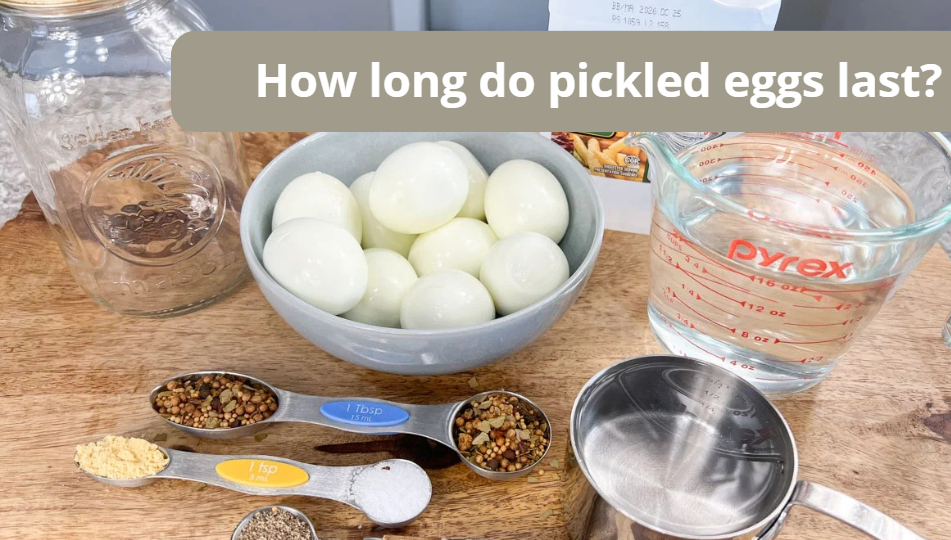
How long do pickled eggs last?
Pickled eggs are a simple, flavorful snack made by soaking hard-boiled eggs in a vinegar-based brine. Pickling can extend the useful life of cooked eggs considerably, but it does not make them shelf-stable. Proper refrigeration, preparation, and storage are essential.
So, how long do pickled eggs last?
As a practical rule, homemade pickled eggs should be kept refrigerated at 40°F (4°C) or below and used within about 3–4 months. For the best flavor and texture, many people prefer eating them considerably sooner. Commercially prepared pickled eggs should be stored according to the manufacturer’s directions and used by the date printed on the package.
Here is everything you need to know about their shelf life, storage, spoilage, and safety.
How Long Do Pickled Eggs Last in the Refrigerator?
Properly prepared and refrigerated pickled eggs can generally be stored for up to 3–4 months.
That is substantially longer than ordinary hard-boiled eggs, which typically have a refrigerated shelf life of about one week.
The acidic pickling solution helps preserve the eggs, but refrigeration remains essential. Homemade pickled eggs should not be treated like shelf-stable jars of commercially canned pickles.
For quality rather than just maximum storage time, eating them within several weeks is often preferable. Over time, the brine continues to penetrate the egg, changing both its flavor and texture.
Do Pickled Eggs Have to Be Refrigerated?
Yes. Homemade pickled eggs should remain refrigerated.
It is a common misconception that vinegar automatically makes any pickled food safe to keep at room temperature. Pickled eggs are different from many properly canned vegetables.
Eggs are a low-acid food. Although they are submerged in an acidic brine, safe home preparation does not make them a shelf-stable canned product.
Keep the jar in the refrigerator throughout storage and return it promptly after serving.
Dinner, then Dessert
How Long Can Pickled Eggs Sit Out?
Treat pickled eggs much like other perishable refrigerated foods.
As a general food-safety rule, don’t leave them at room temperature for more than 2 hours. If the surrounding temperature is above 90°F (32°C), that window drops to approximately 1 hour.
For a party or buffet, it is better to put out a small quantity and replenish it from the refrigerated jar rather than leaving the entire batch on the table for hours.
If eggs have been sitting out for an unknown or extended period, throwing them away is the safer option.
Why Does Pickling Make Eggs Last Longer?
The main preservative is the acidic brine, usually made primarily with vinegar.
A typical pickling mixture may contain:
- Vinegar
- Water
- Salt
- Sugar
- Herbs
- Spices
- Garlic
- Onions
- Chili peppers
- Beet juice
The vinegar creates an acidic environment that inhibits the growth of many microorganisms. Salt and other ingredients may contribute to preservation and flavor as well.
However, the protection isn’t absolute. That’s why refrigeration and sanitary preparation remain important.
How Long Does It Take to Pickle Eggs?
You can technically eat the eggs relatively soon after putting them into the brine, but they won’t immediately taste like fully pickled eggs.
Small eggs absorb flavor more quickly, while large eggs need more time for the brine to reach the center.
A few days will produce lightly pickled eggs. Giving them one to two weeks in the refrigerator generally results in much stronger flavor throughout the egg.
The longer they sit, the more intense the vinegar and spice flavors become.
How to Store Pickled Eggs Correctly
Good storage begins before the eggs ever enter the refrigerator.
Use clean utensils, containers, and preparation surfaces. Hard-boil the eggs, cool them, and peel them carefully. Eggs that become badly damaged during peeling are better used for another dish.
Prepare your vinegar-based brine according to a tested recipe. Place the peeled eggs in a clean food-safe container, cover them completely with the brine, close the container, and refrigerate it immediately.
A glass jar with a tight-fitting lid is particularly convenient because it doesn’t readily absorb odors or flavors.
Keep the eggs submerged in the brine during storage.
Where in the Refrigerator Should You Keep Them?
Store pickled eggs in a consistently cold part of the refrigerator rather than somewhere that experiences frequent temperature fluctuations.
The refrigerator door tends to warm slightly every time it is opened. A shelf toward the back of the refrigerator usually provides a more consistent temperature.
Your refrigerator should stay at 40°F (4°C) or colder.
How Can You Tell If Pickled Eggs Have Gone Bad?
Because pickled eggs naturally have a strong acidic smell, detecting spoilage by odor isn’t always as straightforward as it is with ordinary eggs.
Nevertheless, there are several warning signs.
Discard the eggs if you notice an unexpected rotten or strongly unpleasant odor, unusual mold growth, suspicious changes in appearance, or other clear evidence that the food has spoiled.
Also pay attention to the storage history.
Even perfectly normal-looking food can potentially contain harmful microorganisms. If you don’t know how long the eggs have been stored or if they have spent an extended period unrefrigerated, don’t rely solely on appearance or smell.
When storage conditions are questionable, discarding the batch is the safest choice.
Is Cloudy Pickle Brine a Sign of Spoilage?
Not necessarily.
Some ingredients can naturally make pickling liquid cloudy. Spices, seasonings, garlic, salt, or particles from the eggs themselves can affect its appearance.
Cloudiness therefore isn’t automatically proof that your eggs are spoiled.
On the other hand, unexpected changes accompanied by mold, off odors, gas production, unusual textures, or questionable storage conditions are good reasons to discard the batch.
Why Do Pickled Eggs Become Rubbery?
One of the biggest disadvantages of keeping pickled eggs for a long time is texture.
Acid gradually changes egg proteins. As the eggs remain in vinegar brine, the whites can become increasingly firm and eventually rubbery.
Using extremely strong vinegar doesn’t necessarily produce better pickled eggs. It can simply result in an aggressively sour flavor and tougher texture.
Following a tested recipe provides a better balance of acidity, flavor, and consistency.
Why Does the Yolk Change Color?
Color changes aren’t necessarily a problem.
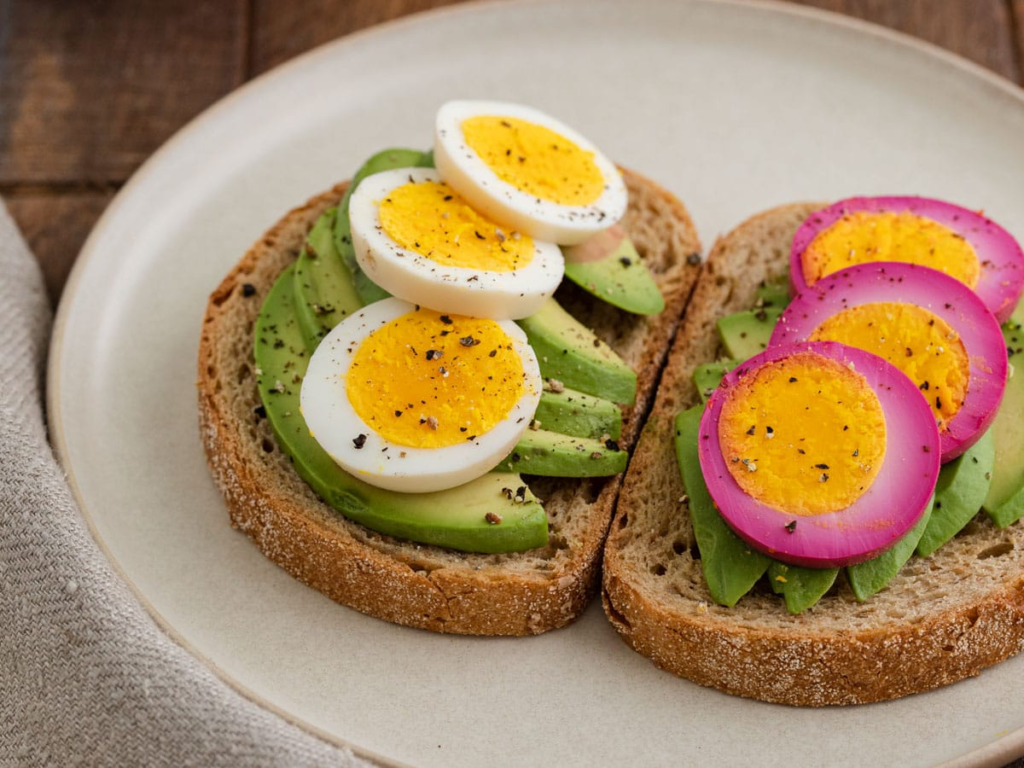
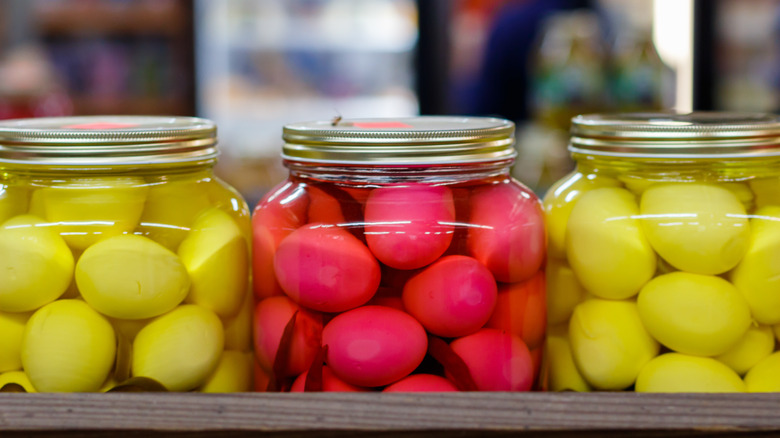
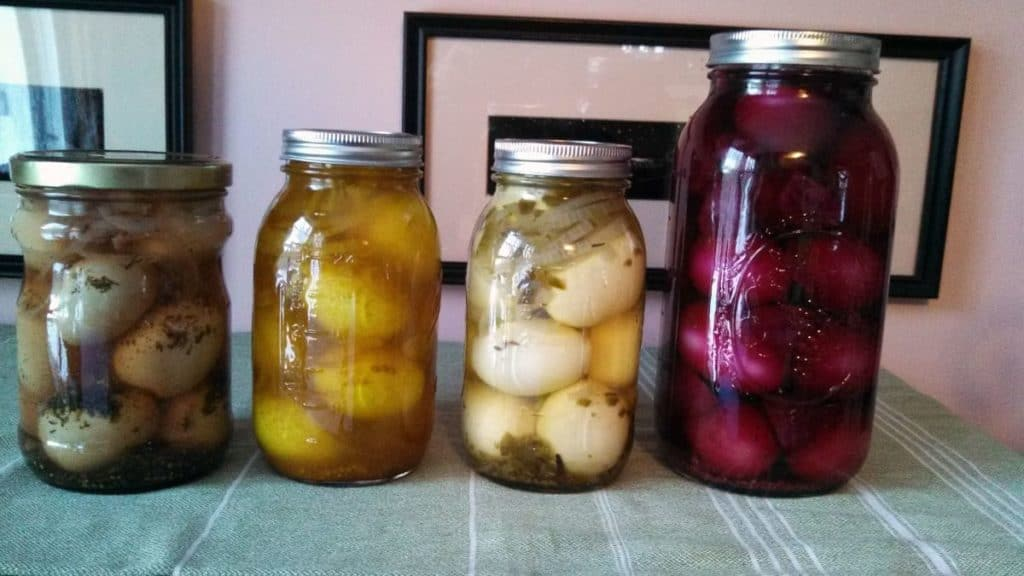
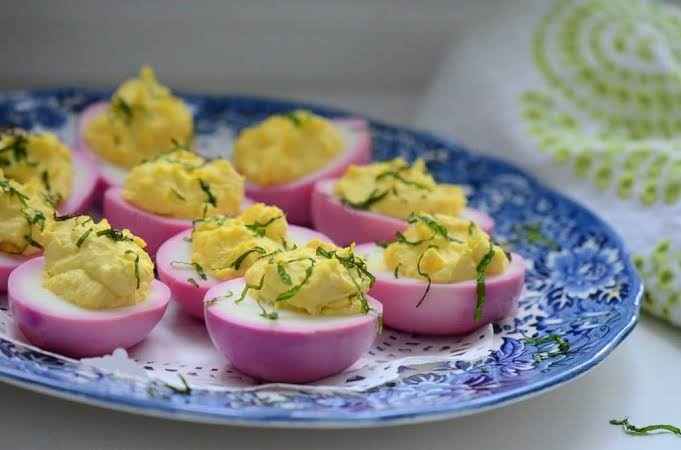
Beet-pickled eggs, for example, develop a dramatic pink or purple exterior. Given enough time, the color can penetrate deeply into the egg.
Other ingredients can create yellow, orange, or brown tones.
There can also be a greenish-gray ring around the yolk of a hard-boiled egg. This is usually caused by the cooking process rather than pickling and is generally harmless.
Can You Reuse Pickled Egg Brine?
Reusing old egg brine for a completely new batch isn’t the best practice.
Once cooked eggs and utensils have been in the jar, the liquid has been exposed to additional moisture, food particles, and potential contamination.
For a fresh batch of eggs, preparing fresh pickling solution is the safer approach and usually gives better flavor as well.
Can You Freeze Pickled Eggs?
Freezing isn’t recommended.
Hard-boiled egg whites tend to develop an unpleasant, tough or rubbery consistency after freezing and thawing. Pickling doesn’t solve that problem.
Refrigeration is therefore the preferred storage method.
If you’ve prepared more eggs than you can reasonably eat, making smaller batches in the future is better than freezing them.
Can You Store Pickled Eggs at Room Temperature in a Sealed Jar?
Not safely using ordinary home refrigerator-pickling methods.
A sealed lid does not make food shelf-stable.
This distinction is particularly important because improperly handled pickled eggs have been associated with serious foodborne illness, including botulism. Don’t improvise room-temperature preservation methods or assume that adding extra vinegar makes a homemade jar safe to store in a pantry.
Unless you are using a specifically validated preservation process from a reliable food-safety authority, keep homemade pickled eggs refrigerated.
What Is the Best Vinegar for Pickled Eggs?
White distilled vinegar is one of the most common choices because it provides strong acidity without introducing much additional flavor.
Apple cider vinegar gives the eggs a sweeter, fruitier character and darker color.
You can also combine vinegars when following an appropriate recipe.
Whatever variety you choose, acidity matters for food preservation. Don’t arbitrarily dilute vinegar or substantially change the vinegar-to-water ratio in a tested recipe.
How to Make Pickled Eggs Last as Long as Possible
Several simple habits make a major difference:
- Start with fresh eggs and clean equipment.
- Cook and peel the eggs properly.
- Use a tested vinegar-based pickling recipe.
- Place the eggs in a clean container.
- Keep the eggs covered by the brine.
- Refrigerate the jar promptly.
- Maintain a refrigerator temperature of 40°F (4°C) or colder.
- Remove eggs with a clean fork or utensil instead of your fingers.
- Don’t leave the jar sitting at room temperature.
- Write the preparation date on the container.
Dating the jar is especially useful. After several weeks, it’s surprisingly easy to forget exactly when a batch was prepared.
Homemade vs. Store-Bought Pickled Eggs
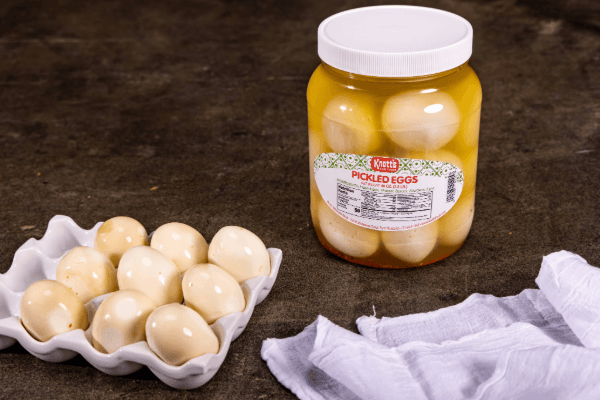
Commercial pickled eggs can be different from homemade refrigerator pickles.
Manufacturers may use controlled processing techniques, precisely formulated acidity levels, preservatives, or specialized packaging. Consequently, an unopened commercial product may sometimes be shelf-stable.
That does not mean a homemade version is equally safe at room temperature.
For store-bought pickled eggs, follow the package instructions. Some products require refrigeration only after opening, while others may need refrigeration continuously.
Quick Shelf-Life Guide
| Type | Approximate Storage |
|---|---|
| Regular hard-boiled eggs | About 1 week refrigerated |
| Homemade pickled eggs | Up to about 3–4 months refrigerated |
| Pickled eggs at room temperature | Maximum about 2 hours as a general perishable-food rule |
| Pickled eggs above 90°F (32°C) | Maximum about 1 hour |
| Frozen pickled eggs | Not recommended |
| Commercial pickled eggs | Follow manufacturer’s label |
These times assume appropriate preparation and storage. When a product’s label gives more restrictive instructions, follow the label.
Are Pickled Eggs Worth Making?
Absolutely—particularly if you enjoy sharp, salty snacks and want an easy way to prepare eggs ahead of time.
Their biggest strengths are convenience and versatility. The same basic technique can produce dramatically different flavors.
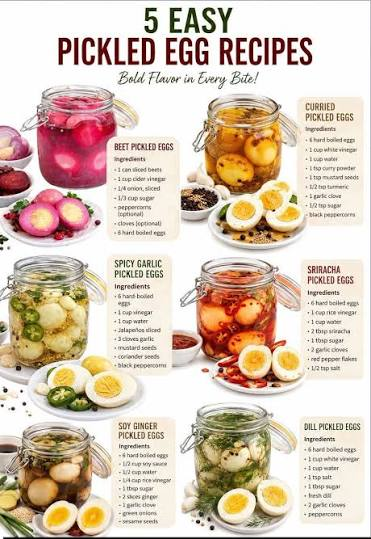
Beet juice creates sweet-and-tangy pink eggs. Jalapeños and chili flakes produce a spicy version. Dill, mustard seed, peppercorns, garlic, and onions can create a more traditional pickle flavor.
They’re also inexpensive and require very little specialized equipment.
The main drawback is that homemade pickled eggs require refrigerator space and aren’t suitable for casual pantry storage. Their texture also becomes firmer the longer they remain in acidic brine.
Final Verdict
So, how long do pickled eggs last? Properly prepared homemade pickled eggs can generally be kept refrigerated for about 3–4 months at 40°F (4°C) or below, although their flavor and texture may be better when they’re eaten sooner.
The most important rule is simple: keep homemade pickled eggs refrigerated. Don’t assume vinegar, a sealed jar, or a strong brine makes them safe for long-term room-temperature storage.
Use clean equipment, follow a tested recipe, keep the eggs submerged, date your jar, and avoid cross-contamination when removing eggs.
Do those things, and pickled eggs can be a convenient, inexpensive, and highly customizable snack that keeps far longer than an ordinary hard-boiled egg.
READ ALSO: Can You Refreeze Cool Whip?